

Nolan’s Odd-essy

Μῆνιν ἄειδε, θεὰ
Sing to Substack Muse, the rage of a Hellenic scholar!!
Western civilization was taught as Hellenic when I became a historian and began my university education. Gilgamesh, Homer, onwards eventually to Shakespeare, these were a full year of the Freshman Program at Catawba to prepare us for learning, impart good values, promote critical thinking, skepticism, and evaluation. We endured philosophy and Thucydides too. As a Classics and European cultural-focused history major, I even had a “I hate Thucydides” white board on my dorm room door with rotating quotes. Aspasia’s Funeral Oration made it worthwhile.
Cultural relativism was denounced as appalling. Now it is standard. As a Classical Studies specialist, it’s vile. We must change history for a modern audience. There must be representational quotas met for eligibility to win awards. Checklist quotas all ticked off.
The Ancient Greeks are not us, we have taken from them and added, but we should never and cannot change history to reflect today. Homer is a Greek epic, Nolan confused Homer with a cartoon character who was a comedic dad and blithering idiot in The Simpsons. Wrong Homer, wrong epic. There’s a lot of food and feasts - and eating your swine-transformed crewmates possibly, in the Odyssey, but no donuts. Not in the Homer I like!
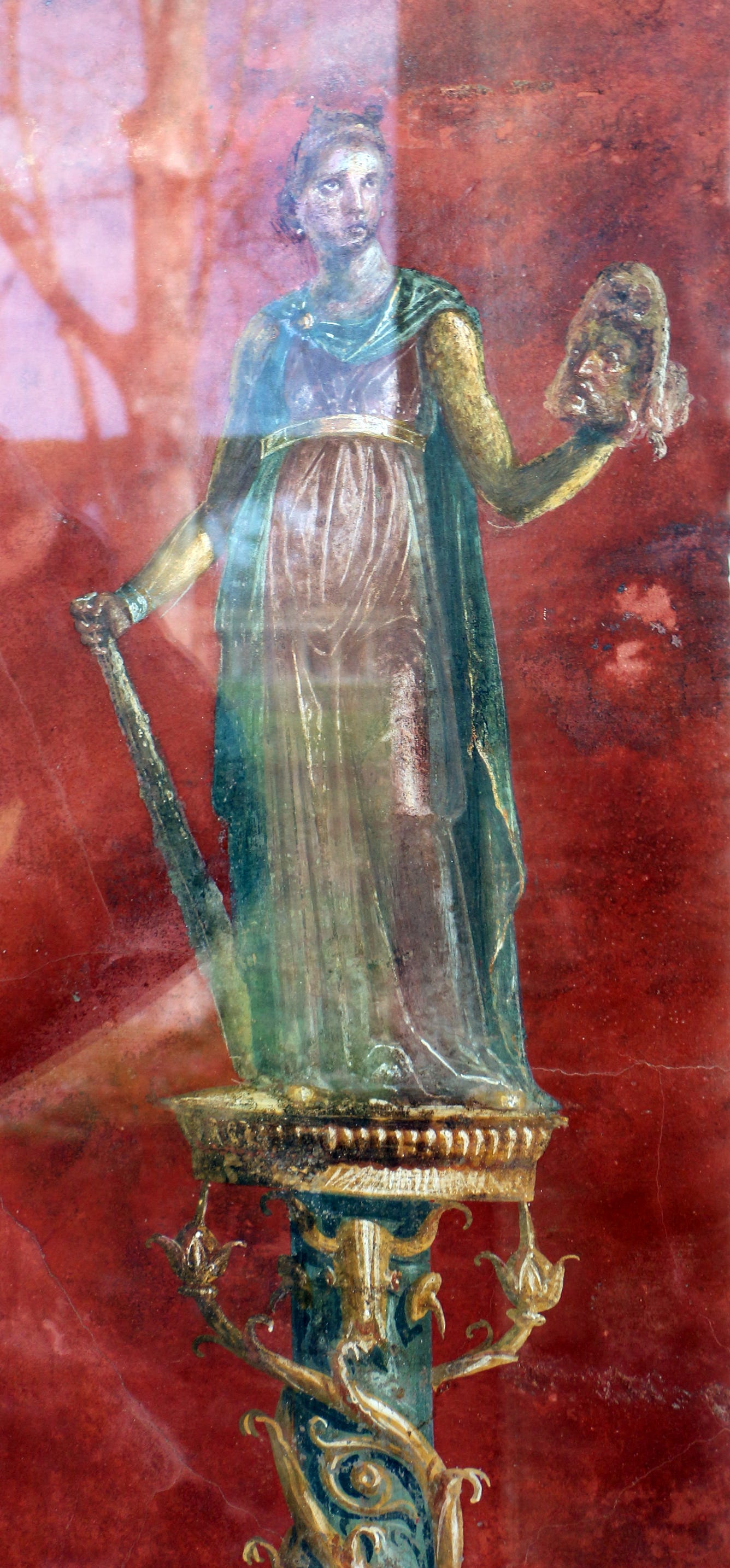
Shame on Nolan and Hollywood. Diogenes could not find him even with a red carpet spotlight nor should we seek this bastardized version of Odysseus’ Nostroi (homecoming).
Scholars and Hellenic people are rightfully disgusted and outraged as the current rewrites of foundational literature that teaches timeless good values.
Demand arete!!! Remember Xenia! Make globi! Serve Kykeon! (Max Miller’s Tasting History is always great history and … well Kykeon is a Homeric hero’s drink, they have strong stomachs under that bronze (Tsk tsk Nolan, Homer is Bronze Age!) armor.
Another Holllywood blockbuster that indoctrinates bad values, and insults the Hellenic humanist legacy of literature, manners, art, of law, and democracy.
Another literally whitewashes the ancient world and then uses Greek tax money to not represent Greeks! They were cities of painted statuary and marble. Colorful, and the people were Mediterranean.
A rant commences-
In ancient Greece, xenia (guest-friendship) was THE sacred code of hospitality. Hosts were required to provide genuine care and hospitality and guests had to be courteous and exchange gifts.
The entire Homeric epic begins with an example of bad houseguests when Paris, who is a guest of Menelaus at Sparta, kidnaps his wife Helen and so begins the Trojan War. The very violation xenia is punished with a war! The Odyssey, where gross obscene violations of xenia cause the narrative. Paris is killed, the Trojans lose the war, Troy is destroyed and Helen is returned to Menelaus, as if nothing happened. Odysseus even has problems with xenia sometimes!
TLDR- Never take your hosts wife and then never eat their cattle of the sun! Be a polite and courteous guest and generous host!
BIG RANT NOW—
I really dislike Helen and Penelope, who allows xenia to be abused. I’ve no sympathy for her, unlike Hekabe, Klytemnestra and Andromakhe, wife of Trojan Hektor, Paris’ more ethical proper Greek man and respectable brother. Paris is a fop. He’s antiquities and the worlds original fuckboy, shame of Troy.
I fear Nolan will make both him noble somehow and not an insufferable hedonistic soft boy and has rewritten Penelope (who’s clever only in undoing her weaving) and Beautiful Golden Helen who actually roofies Telemakhos when he expresses sorrow at his visit into a some strong heroic aspirational girlboss women and victims at the same time to appeal to Gen Z.
Helen is the borrowed divine-bastard tradwife. She’s not half as smart as her athletic, fearsome , capable, half-sister Klytemestra who suffers her child sacrificed for good winds to sail and constant slights as a women and seeks revenge when her husband returns home after she rules successfully in Mycenae without him for ten years. Klytemnestra takes a lover for her pleasure and advisor, but to add insult to injury, he shows up after ten years of her capable rule to make her return to the women’s quarters of the house (sexes were separated and lived apart except if she ruled) and he brings home a much younger Apollo-cursed prophecy-babbling Trojan princess Kassandra, as his enslaved pallakai. He shows up with his own royal comfort woman!
Pallakai were accepted as part of Greek society. In "Against Neaera" the orator says:
We have hetairai [educated companions] for pleasure, pallakai [concubines] for the body's daily needs, and gynaekes [wives] for the bearing of legitimate children and for the guardianship of our houses. .
I’d have killed Agamemnon too had he tricked me into thinking my child won the golden boy of all Greece, Ahkilleus, as my future son in law, had me prepare my daughter for her wedding and send her off to wed, but really had me send my beloved Iphigenia to her death. If famous wandering-dick Agamemnon (Briseis was claimed by him too, ahem) lied and tricked me, killed my beloved daughter as a human sacrifice to the wind god for his war adventures, and went off with his brother and took all the men except a few, to drag my prettier sister back from a divine prank by Aphrodite-ordained booty call gone sideways- the man needing killing.
When any random travelers arrived, the host was expected to welcome them warmly, offer them protection, provide sustenance, and ensure their comfort , even before even asking who the guest was or what business they had. The traveler was required to be respectful of their host's home and their possessions, and kin, refraining from being a burden or overstaying their welcome. That rarely, but occasionally does happen in Homer.
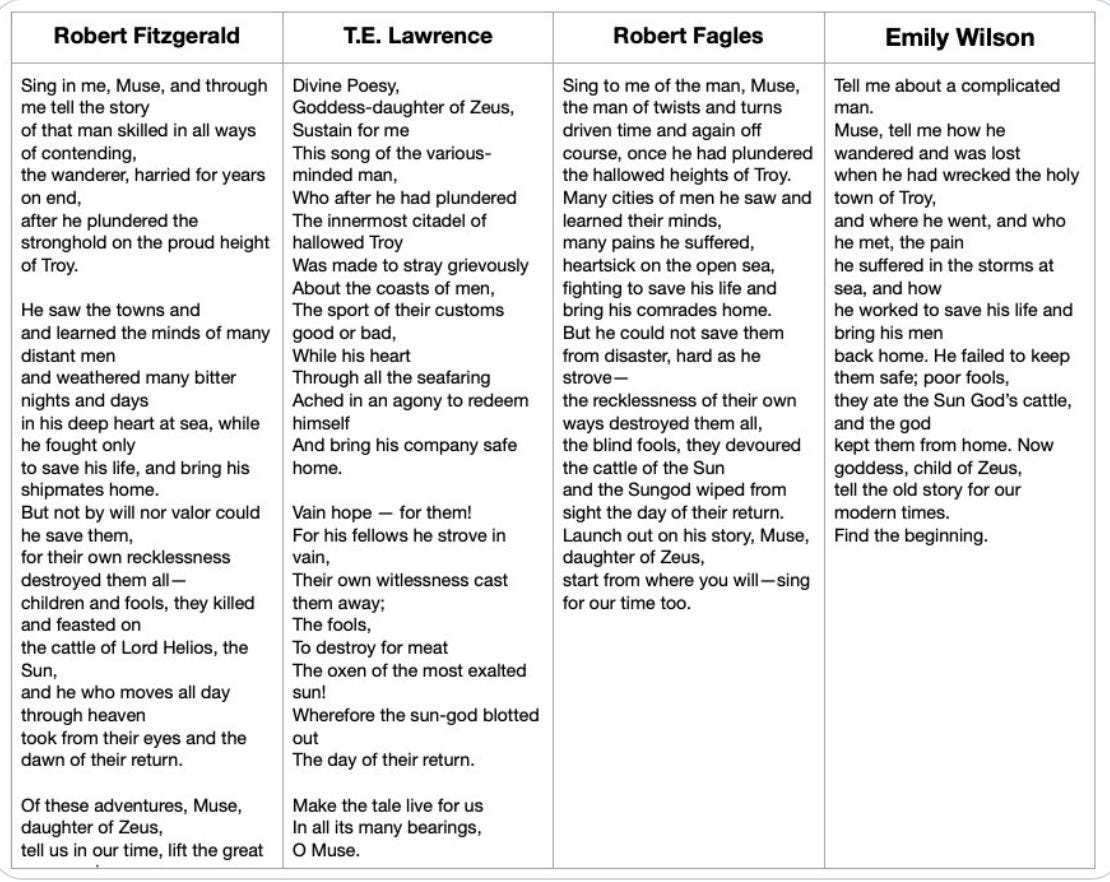
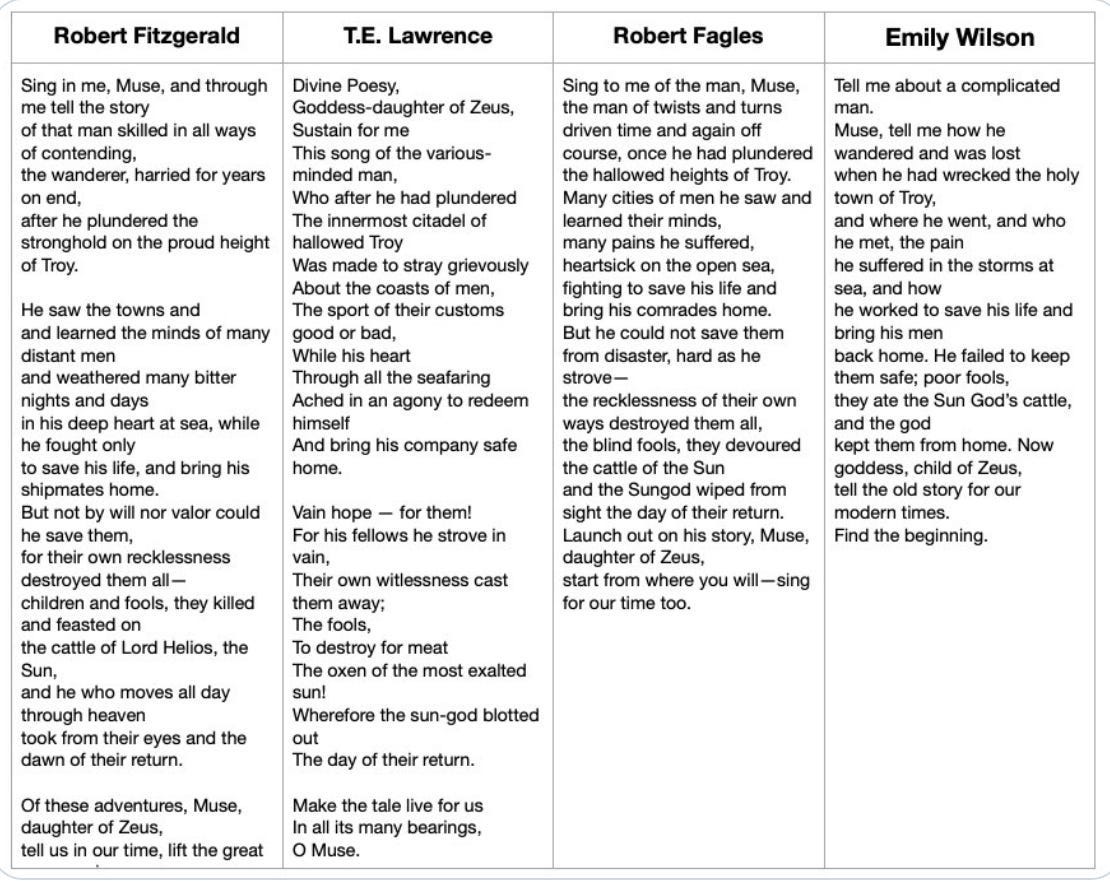
Odysseus is far more than “complicated“. He is a man of incredible intellect and cunning, skilled leadership , and “many twists, and turns”
The Odyssey opens with:
Ἄνδρα μοι ἔννεπε, Μοῦσα, πολύτροπον, ὃς μάλα πολλὰ πλάγχθη, ἐπεὶ Τροίης ἱερὸν πτολίεθρον ἔπερσεν:”
The literal translation is this
“Tell me, Muse, of a man of-many-turns, who wandered very much, after he sacked the holy city of Troy.”
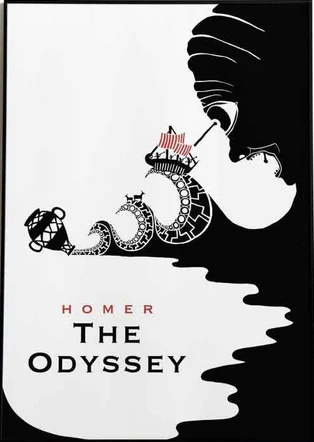
When a guest left, both parties would exchange parting gifts and engage in trade, which acted as tokens of their alliance and friendship. Xenia established lifelong hereditary relationship, meaning families would remain "guest-friends" as long as the lineage continued . The ancient Greek concept of guest-friendship was considered a moral obligation rather than just a polite courtesy. Any guest could be a divinity on a peasant costume and had to be treated with respect.
Treating ANY guest poorly risked divine wrath and severe punishment. Even the suitors were Penelope’s problematic guests who’d overstayed their welcome and Telemakhos was a man who refused to wear his father’s sandals but helped clean the house of 108 suitors.
In a Greek mythology level twist of fate, Odysseus is accidentally killed by Telegonus, his bastard son by the enchantress/witch/goddess Kirke. After Odysseus's death, Telemakhos returns to the island of Aeaea with his half brother and father-killing Telegonus and his mother Penelope, who has to share a home with her husbands former side chick. Telemakhos marries either Kirke, Nausikáa, or Kalypso (all women his father knew or had had affairs with). Nausikáa is one of literatures first recorded poems about unrequited love.
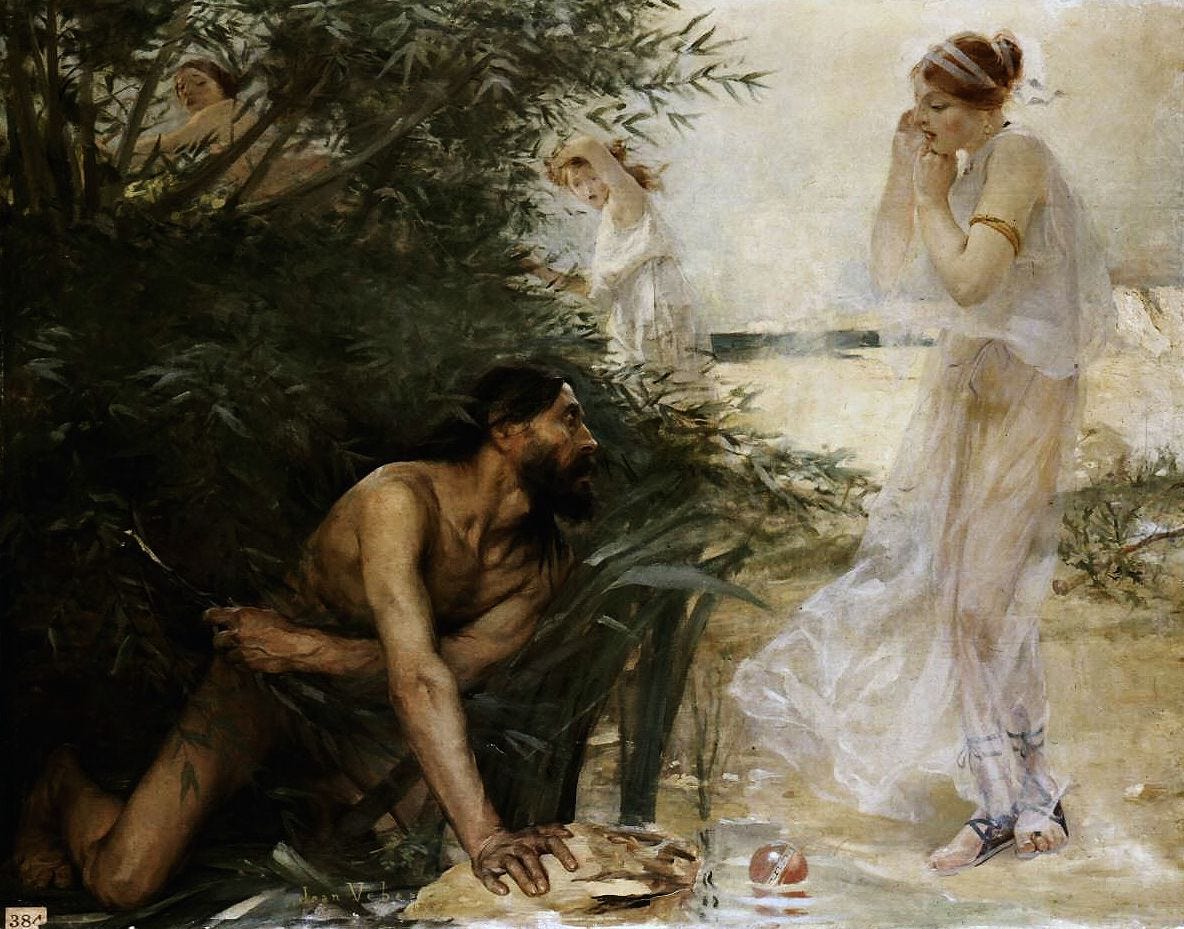
(Odysseus never tells Penelope about his rescue and meeting with the virginal Nausikáa, despite telling her about all the other women he met, lived with, bedded or even impregnated on his way home- a curious omission that always sat wrong with me.)
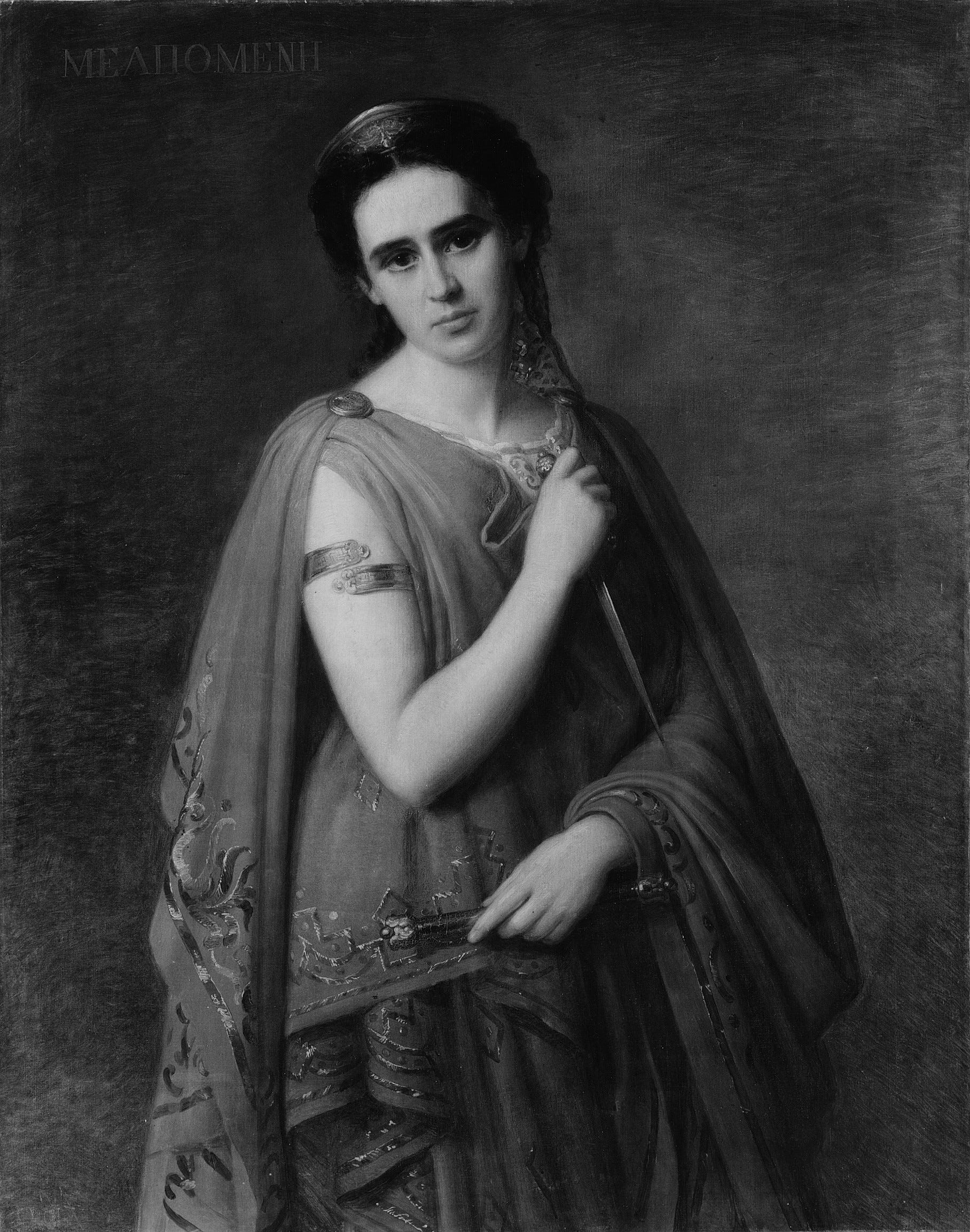
Helen was definitely NOT a parting gift! Nor was she kidnapped! The bitch went willingly as she was in love with the little pretty boy! “The gods made me do it“ was her valid reason and excuse. The Greeks didn’t argue with their gods, though excessive pride, hubris, and xenia-violations were certainly punished with them. With generational curses and war and endless bloodshed!
I fear and strongly suspect that Christopher Nolan Odyssey is the paragon of hubris, and if I went to the theater to see it, I would probably breach the xenia of the theater by walking out and screaming to the Muse the first time the Emily Watson translation and Viking ships of the trailer are shown on screen.
